
How much does a Sports Scientist earn in India (2026)? Get the full salary breakdown by experience, sector, and the top skills that double your pay.
Sports Scientist Salary in India 2026: What You Can Actually Earn
Ten years ago, sports science was a term heard only in European football or NBA locker rooms. Today it is an increasingly important part of Indian sport. Whether you are a 12th grader looking for a stable career or a BCom graduate wanting to switch fields, the question is always the same: is there real money in it? The short answer is yes—but the range is wide. From SAI facilities in Patiala to the high-pressure environment of an IPL dugout, demand for data-driven performance support is growing. This guide gives indicative ranges for the sports scientist salary in India and the career pathways that lead to higher pay. There is no official salary survey for this sector in India, so treat the ranges here as indicative rather than exact, and check current job listings and offer letters before making decisions.

Data is increasingly part of how teams decide when a pacer needs rest. If you can show that your intervention helped keep a key player fit, your value to a team rises. Franchises in the IPL and Pro Kabaddi League (PKL) are among the employers building performance and sports science teams.
Sports Scientist Salary in India 2026: Indicative Ranges by Experience
The table below gives indicative base ranges, not audited figures, and excludes performance bonuses. Pay varies with employer, city, specialisation and contract type.
| Experience Level | Indicative Range (Annual) | Key Requirement |
|---|---|---|
| Entry-Level (0-2 Years) | ₹4.5 LPA – ₹6.8 LPA | BSc/MSc + Tech Certification |
| Mid-Level (3-7 Years) | ₹10 LPA – ₹18 LPA | Proven experience and results |
| Senior/Director (8+ Years) | ₹25 LPA and above | Leadership & Strategic Management |
The gap between average and top-end pay is driven mainly by the prestige of the organisation and the scientist’s ability to integrate technology into athlete performance.
Entry-Level: Starting Your Career in Academies and High Performance Centres
A fresh graduate with a Sports Science Degree India shouldn’t expect an IPL retainer on day one. Most start in private academies or multi-sport high-performance centres in cities like Pune, Bengaluru, or Navi Mumbai. The starting sports scientist salary in India for a fresher is often in the range of ₹4.5 LPA to ₹6.8 LPA. Why the variation? It depends on your technical stack. If you can operate Catapult GPS systems or specialized force plates, you move to the higher end of that bracket. Smaller academies in Tier 2 cities may offer closer to ₹3.5 LPA, but the learning curve there is often steeper.
Mid-Level: Salary Growth After Five Years in the Indian Sports Ecosystem
After five years, your career enters a different phase. You are no longer just ‘assisting.’ You are interpreting data to drive wins. Mid-level scientists may earn roughly ₹10 LPA to ₹18 LPA. By this stage, you have likely worked through a few Ranji Trophy seasons or a stint with an ISL developmental squad. Your value here comes from your network and your ability to manage a team. Are you able to coordinate with the head coach, the nutritionist, and the physiotherapist? If you can bridge those gaps, you become indispensable.
Senior Roles: Performance Directors and Lead Scientists at ₹25+ LPA
At the top of the pyramid sit the Performance Directors. These are the strategists who oversee the entire medical and science department for a franchise or a national team. Senior sports scientists may earn ₹25 LPA or more, with the highest packages at professional franchises and national set-ups. At this level, you are not just a scientist; you are a high-level manager who understands the business of winning.
How to Increase Your Sports Scientist Salary: The ‘Value-Add’ Skills
In the 2026 market, a degree is the baseline, but certifications are the accelerators. If you are stuck at the lower end of the salary bracket, the following skill sets are useful ways to strengthen your position.
- Advanced Tech Stack: Mastery of wearable tech is no longer optional. Proficiency in Catapult, STATSports, and force plate analysis (like Vald) can strengthen your offer.
- Global Certifications: Earning a CSCS (Certified Strength and Conditioning Specialist) or an ESSA accreditation makes you a global asset, allowing you to negotiate higher retainers with private franchises.
- Data Analytics & AI: The ability to use Python or R for predictive injury modeling is what separates a ‘coach’ from a ‘scientist’. Integrating AI into workload management is a fast-growing skill in the field.
- Specialization: Generalists earn less. Specializing in biomechanics for fast bowlers or metabolic conditioning for midfielders allows you to charge a premium as a subject matter expert.
By stacking these certifications on top of your formal education, you move from being a commodity to a specialist, significantly increasing your bargaining power during annual appraisals.

Sports Science Jobs Salary in India: Sector-Wise Comparison (2026)
Government Sector: SAI Pay Scales
The Sports Authority of India (SAI) hires sports scientists on contract at its National Center for Sports Science & Research (NCSSR). SAI’s 2023 advertisement for consultants listed ₹80,000 to ₹1,45,000 per month, fixed within that band by qualification and experience. The same notice states that allowances such as DA, accommodation, HRA and conveyance are not admissible, and that the contract can be ended without notice. Check the SAI website for current openings and terms.
Private Academies: Reliance Foundation, JSW, and Tata Football Academy
Corporate-backed academies such as those run by Reliance Foundation or JSW Sports invest heavily in infrastructure, and roles there tend to be performance-driven. Pay is not published, so ask about the structure, increments and KPIs when you receive an offer.
Sports Scientist vs. Performance Analyst vs. Nutritionist: Salary Comparison
Many aspirants confuse the roles of a sports scientist with those of a performance analyst or a sports nutritionist. While these roles often overlap in a High-Performance Centre (HPC), their salary trajectories differ based on the ‘leverage’ they provide to the team.
The Sports Scientist typically earns a higher base salary because their role is holistic, covering physiology, biomechanics, and recovery. They are the ‘architects’ of the athlete’s physical state.
The Performance Analyst focuses on tactical data. Demand has grown with the rise of real-time data in T20 and ISL, and pay can be comparable to sports scientists at a similar level, though it may depend more on team success. See our guide to performance analyst salaries.
The Sports Nutritionist often operates on a consultancy basis. While earnings can be high for private elite athletes, their institutional pay can differ from a Lead Sports Scientist’s depending on the organisation and qualifications.
Consultancy and Freelancing: The High-Margin Side of Sports Science
Can you work for yourself? Yes. Some senior scientists work as consultants for elite private athletes, such as top badminton players or shooters who hire their own performance teams outside the national camp. Rates are negotiated individually and vary widely. It is a high-risk, high-reward path that depends on reputation.
The Franchise Factor: IPL Sports Scientist Salary and Major Leagues
Working with the 10 IPL Franchises: Retainers vs. Seasonal Contracts
IPL is where the highest-profile roles are. Franchises do not publish pay scales, and arrangements range from seasonal contracts around the tournament to year-round retainers for senior staff. Expect wide variation depending on role, experience and franchise.
ISL and Pro Kabaddi: How Emerging Leagues Compare in Terms of Pay
The Indian Super League (ISL) follows a longer calendar than the IPL, which can offer more monthly stability. Pro Kabaddi (PKL) has a shorter season, but demand for injury prevention support is strong because of the high-impact nature of the sport. Pay for both varies by role and franchise and is not published.

Specialization Matters: Sports Nutritionist Salary India vs. Strength & Conditioning
Not all sports science roles pay the same. The niche you choose determines your floor and your ceiling. Specialising in areas like sports nutrition or biomechanics can strengthen your earning potential. For the management side of the industry, see the scope of sports management in India.
Why Specializing in Sports Nutrition Can Boost Your Earning Potential
A general dietician and a sports nutritionist are not the same. A sports nutritionist manages glycogen loads for a marathoner or the weight cut for a wrestler, and sports-specific training can help you stand out from general clinical roles. To compare the two career tracks in more detail, read our guide on sports nutritionist vs sports scientist salary in India, or explore our distance education options.
Biomechanists and Performance Analysts: The New Tech-Heavy Paycheques
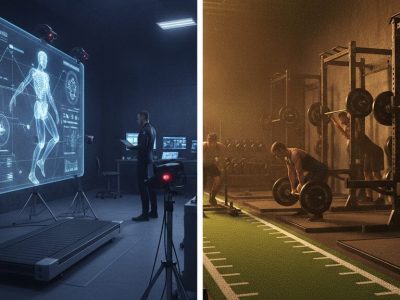
Biomechanics is a technical, in-demand specialisation. If you can use 3D motion capture to help fix a fast bowler’s action, teams will value you. It is tech-heavy and math-heavy, which is why it rewards people who build both the science and the software skills.
How to Maximise Your ROI on a Sports Science Degree
The Importance of UGC-Recognized Qualifications
Let’s be honest. There are many ‘weekend certifications’ out there. But if you want to work for SAI, the BCCI, or a major franchise, a UGC-recognised degree is usually expected. Your sports management courses after 12th or graduation must have institutional weight. Check that any programme you choose is UGC-recognised and offers real practical exposure.
Why Networking in the Indian Sports Industry Beats Job Boards Every Time
Many of the best jobs are never widely advertised. They are often filled through word-of-mouth in the dugout or the cafeteria of the National Sports University. You need to be in the rooms where decisions are made. This is why we focus so heavily on internships. Whether it is an internship with an IPL team or a placement at a Pune-based sports tech startup, that first foot in the door is worth more than your final grade. Your professional circle matters for pay, and for the management side of the industry, see our sports management salary in India guide.
Frequently Asked Questions
What is the starting sports scientist salary in India for a fresh graduate?
Indicatively ₹4.5 LPA to ₹6.5 LPA, depending on whether you work for a local academy or a high-performance centre in a Tier 1 city. Smaller academies may pay less.
Do IPL teams hire sports scientists on a full-time basis?
Arrangements vary. Some roles are seasonal around the tournament, and senior staff may be on year-round retainers. Franchises do not publish pay scales.
How much does a sports nutritionist earn compared with a general dietician?
There is no published benchmark. Sports-specific training can help you stand out, but pay depends on the employer and your experience. See our sports nutritionist vs sports scientist comparison.
What are typical government salaries for sports scientists?
SAI’s 2023 notice for consultants at its National Center for Sports Science & Research listed ₹80,000 to ₹1,45,000 per month on contract. See the SAI advertisement and check the SAI website for current terms.
Which certifications help my salary as a sports scientist?
Practical skills in GPS tracking (Catapult) and biomechanical analysis software are valued, and certifications such as CSCS or ESSA accreditation can help. A UGC-recognised degree is still the foundation.
Is a Masters in Sports Science necessary for a high salary?
It is not mandatory for entry-level roles, but a Masters can help you progress to senior and specialist roles, especially in national set-ups.
Can I transition from a physiotherapy background to sports science?
Yes. Physios with sports science training are valued in performance teams. See sports science vs physiotherapy.
How do I get started?
Start with our sports science degree guide for eligibility, syllabus and career paths.
The Bottom Line
The sports industry in India is no longer just about the players; it is about the science that keeps them on the field. A sports scientist salary in India typically starts modestly, and grows with experience, specialisation and the quality of your practical exposure. If you are ready to start working in performance sport, the first step is getting the right credentials. ISST has been bridging this gap since 2008. When you are ready to move from enthusiast to professional, let’s have a conversation about your future in sports science.
The Institute of Sports Science & Technology (ISST), founded in 2008 in Pune, is India’s premier education center dedicated exclusively to sports management and sports science. By integrating cutting-edge academic pedagogy, robust industry partnerships, and scientific methodologies, ISST develops top-tier professionals equipped to lead the modern sports, fitness, and wellness industries.
- Founded in 2008 as a pioneer in Indian sports education
- Offers specialized programs in Sports Management & Sports Science
- Strong industry partnerships with leading sports leagues, teams, and organizations
- Faculty comprises expert sports scientists, veteran coaches, and industry researchers
- Dedicated placement cell with extensive national and international support